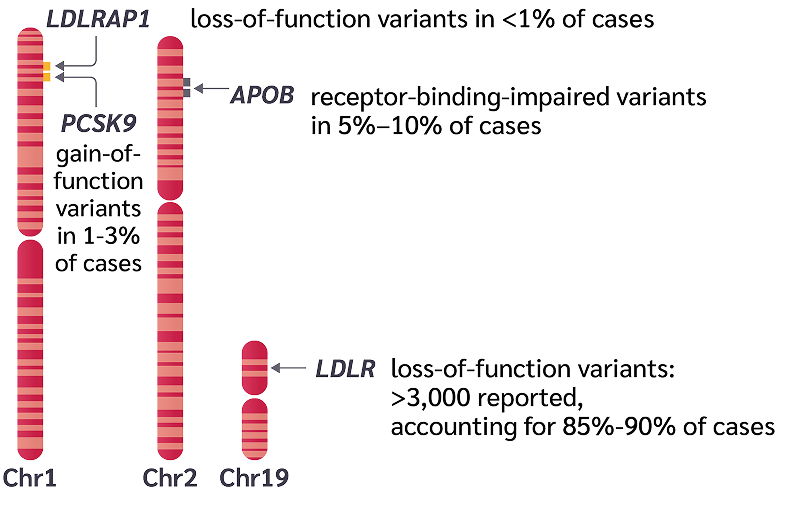
HoFH is associated with pathogenic variants of
several genes affecting LDL receptor (LDLR) activity2,3
The majority of LDL-C is cleared from the plasma by LDLRs located on the
cellular membranes of the liver cells3
Pathogenic variants in genes impairing LDLR function have also been
identified in patients with HoFH:3,4
- APOB: Gene encoding apolipoprotein B
- LDLR: Gene encoding the low-density lipoprotein receptor
- LDLRAP1: Gene encoding low-density lipoprotein receptor adaptor protein 1
- PCSK9: Gene encoding proprotein convertase subtilisin/kexin type 9 protein (PCSK9)
Adapted from Cuchel et al. 2023.
<10% of LDLR variants have been directly studied functionally4
These pathogenic variants affect different aspects of LDLR function and can be broadly
categorised into six classes:3
- Absent synthesis of LDLR or precursor protein
- Defective LDLR transport from the endoplasmic reticulum
- Impaired binding to LDL
- No LDLR/LDL internalisation because of defective clustering in
clathrin-coated pits
- No LDLR recycling
- Failed LDLR transport to the surface of the cell membrane
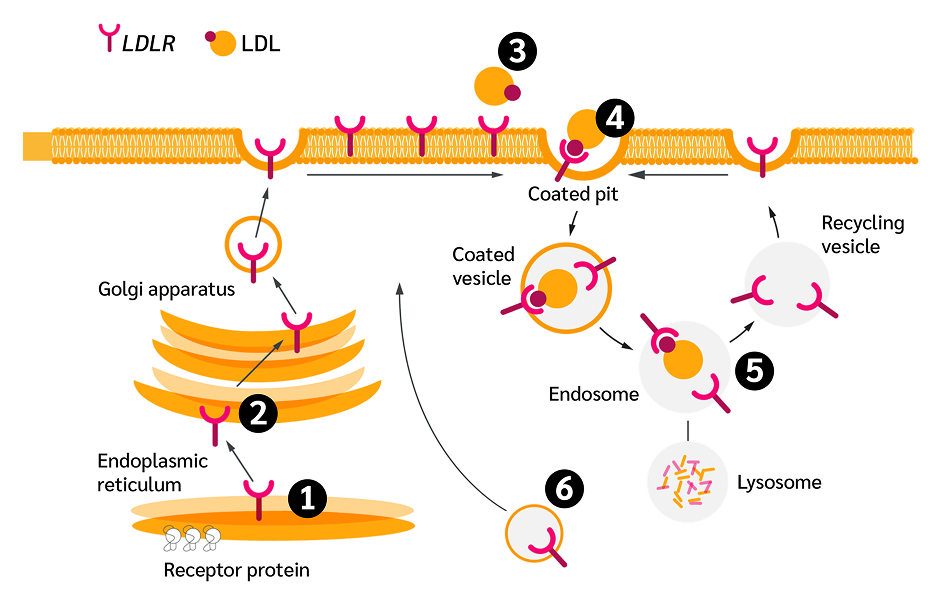
Adapted from Gidding et al. Circulation 2015.
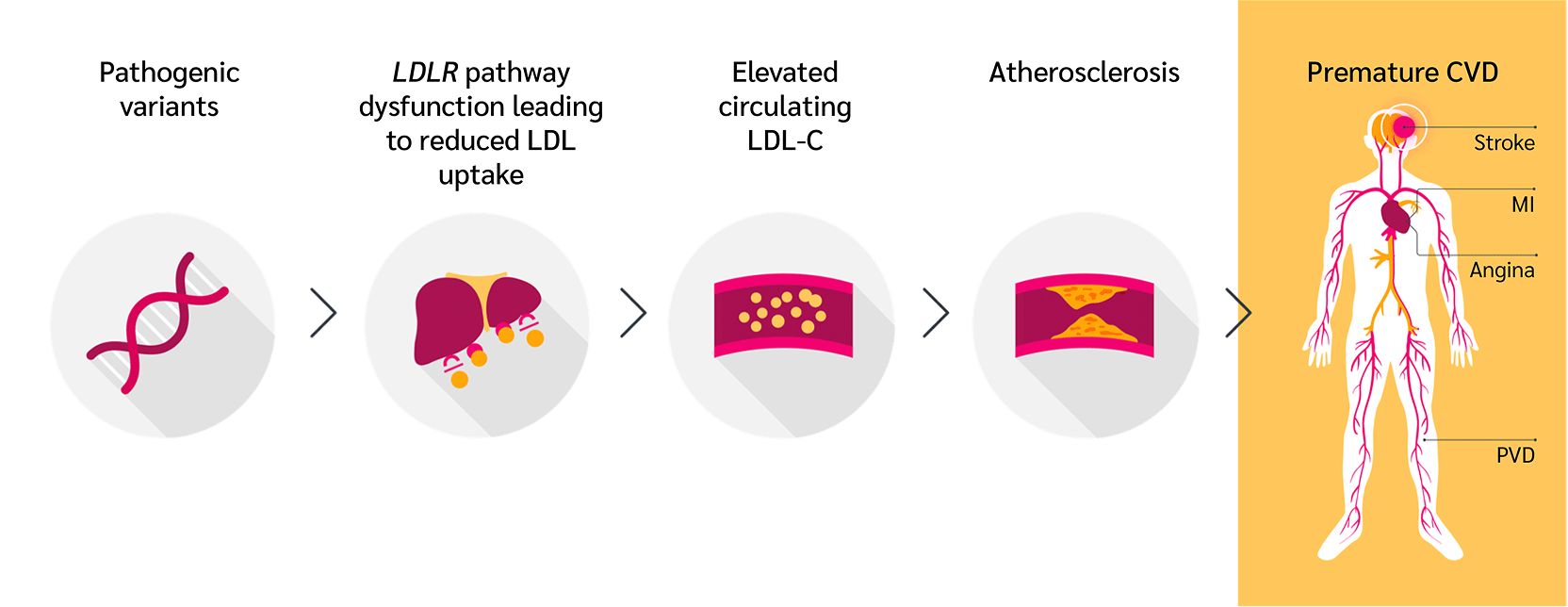
Pathogenic variants cause LDLR dysfunction and reduce removal of LDL-C
from the blood, leading to premature atherosclerosis and cardiovascular complications1,3-5
This figure applies to FH in general.
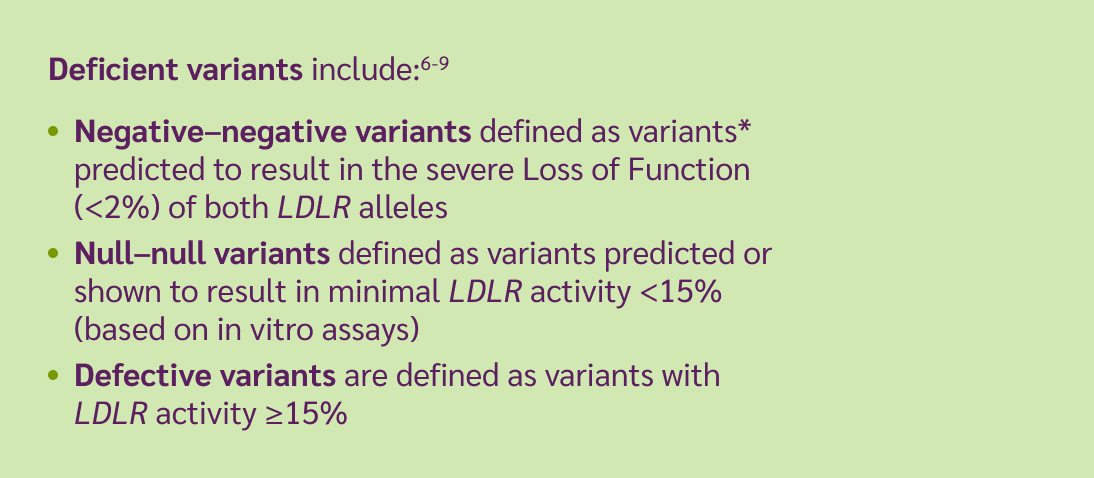
*Such as premature stop codons, frameshifts, splice site changes,
small and large insertions/deletions, and copy number variations
Compared with patients who are double LDLR-defective and LDLR-defective + LDLR-deficient,
patients who are double LDLR-deficient (null–null) present with:3,9-11
- Higher LDL-C
- Higher incidence of CVD
- Worse prognosis
- Reduced response to drug therapy
The majority of LDL-C is cleared from the plasma by LDLR located on the cellular membranes of the
liver2
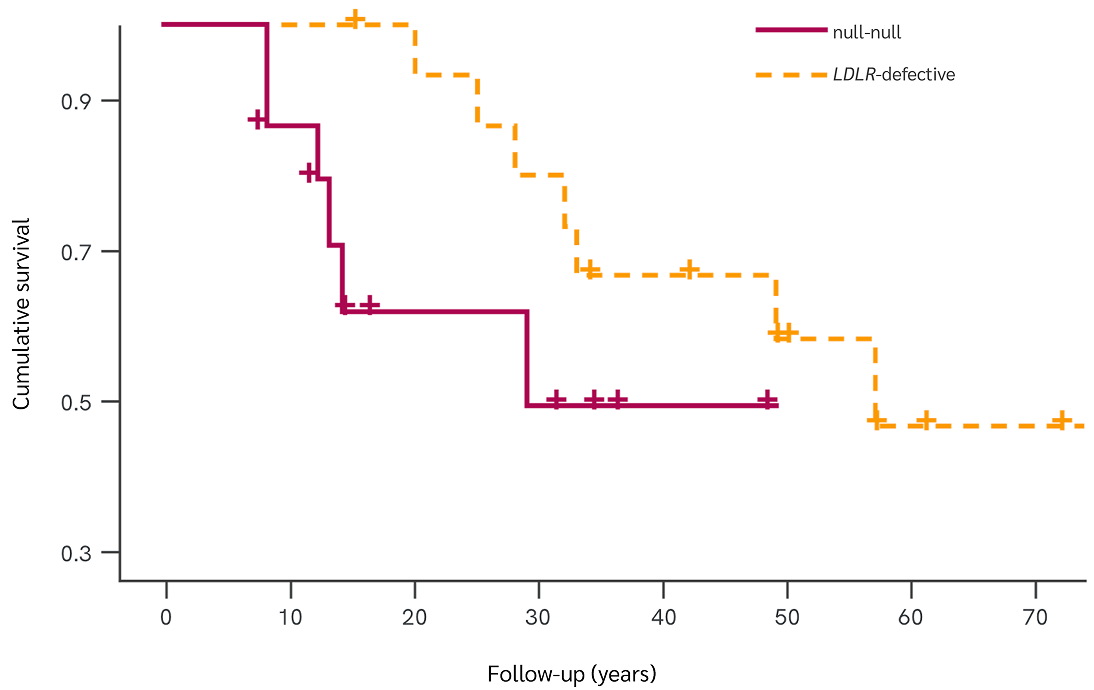
Adapted from Alonso et al., 2016.
CVD-free survival in HoFH patients in the SAFEHEART
registry8*
*The SAFEHEART registry is a nationwide registry that includes FH patients living in Spain.
Patients are enrolled and followed up every year to record relevant changes in lipid-lowering
treatment and development of cardiovascular events. The graph shows survival data from 34 HoFH
patients enrolled from 2004 to 2015.
APOB, apolipoprotein B; Chr, chromosome; CVD, cardiovascular disease; FH, familial hypercholesterolaemia; HeFH, heterozygous familial hypercholesterolaemia; HoFH, homozygous familial hypercholesterolaemia; LDLR, low-density lipoprotein receptor; LDLRAP1, LDL receptor adaptor protein 1; MI; LDL-C, low-density lipoprotein cholesterol; PCSK9, proprotein convertase subtilisin/kexin type 9; PVD, peripheral vascular disease.

 I am a patient or
  I am a healthcare professional in the UK.